

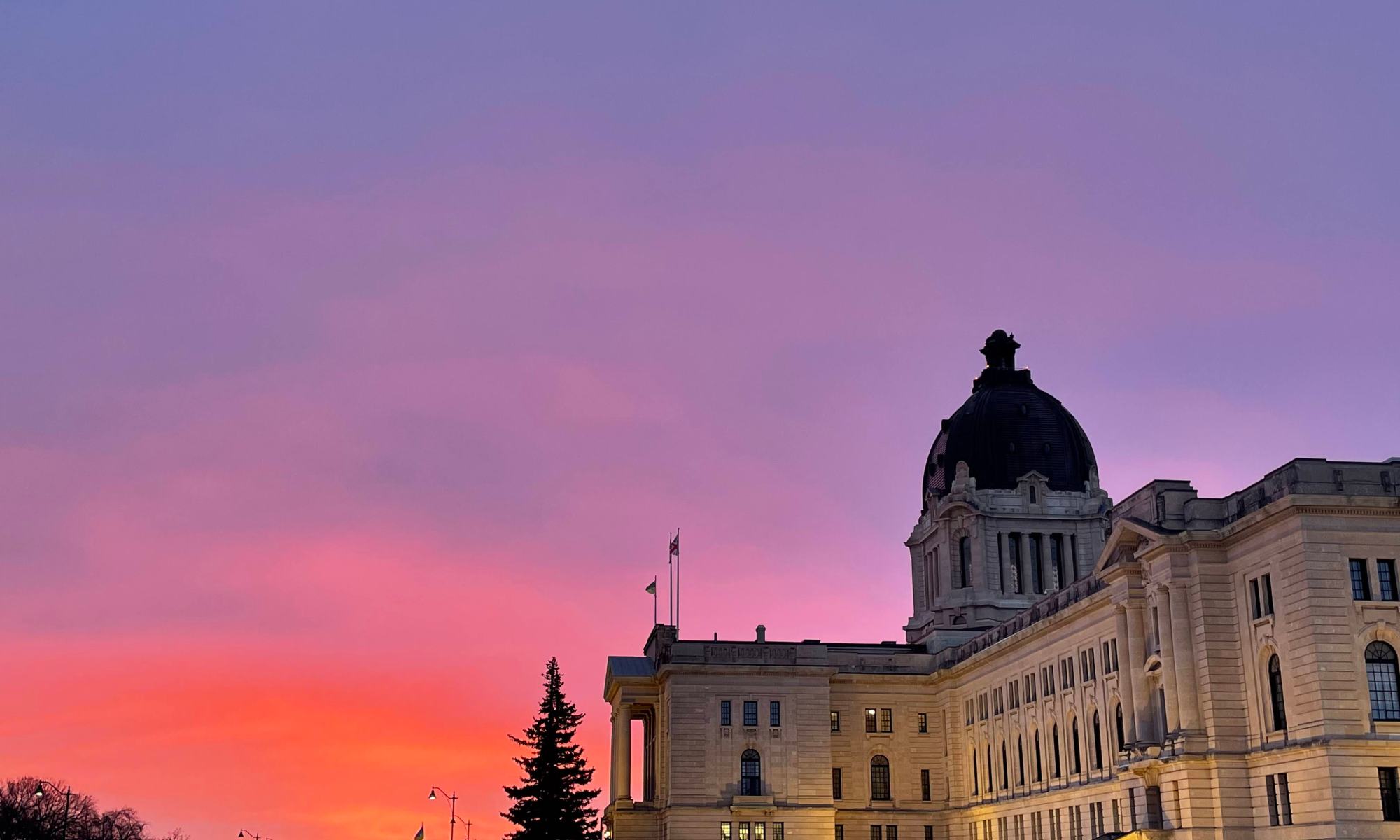

1905 was the year that Saskatchewan officially became a province in Canada.
I really like learning about history and politics, so this topic lines up with those two things quite well. Even if you aren’t from Saskatchewan or even Canada, I hope you are willing to join me on this quick little history lesson on the place I call home.
Saskatchewan is a very misunderstood place and often overlooked. I want to highlight a few of the reasons I think it’s a wonderful place.
It’s a beautiful place and I am deeply proud of it. Other provinces might look at us like their little brother and just pat us on the head sometimes, but there is so much more to the Saskatchewanians who live here, and the pride that we have in our home.
Who Was Involved
- Prime Minister Sir Wilfrid Laurier: The Canadian Prime Minister who supported the creation of the province.
- John A. Macdonald: The first Prime Minister of Canada, who laid the groundwork for western expansion.
- The People of Saskatchewan: The settlers, Indigenous peoples, and communities who lived in the area before and after it became a province.
- Premier of Saskatchewan: After joining Canada, Saskatchewan’s first Premier was Thomas Walter Scott (1905-1916).
What Happened
- Saskatchewan officially became a province on September 1, 1905, splitting off from the Northwest Territories.
- The creation of Saskatchewan as a province was part of a larger process of expanding Canada westward.
- Saskatchewan joined Canada on September 1, 1905, after the federal government passed the Saskatchewan Act and the Alberta Act (which created Alberta at the same time).
- Saskatchewan is located in Western Canada, bordered by the provinces of Alberta to the west, Manitoba to the east, and the U.S. states of Montana and North Dakota to the south.
- The area that became Saskatchewan was previously part of the Northwest Territories before the province was created.
Why It All Happened
- Population Growth: The Canadian government wanted to encourage settlement and development in the West, as the area was sparsely populated at the time.
- Economic and Social Factors: The expansion was partly driven by the desire to establish an agricultural economy and connect the West to the rest of Canada (via the Canadian Pacific Railway, which was completed in 1885).
- Political Strategy: The creation of two provinces, Saskatchewan and Alberta, was a way for the federal government to strengthen control over the West, as well as to provide local governance in a rapidly expanding region.
- Indigenous Land Rights: The creation of the province and the development of land in Saskatchewan were heavily intertwined with the impact on Indigenous communities, particularly the signing of the Treaties 4 and 6 (1874 and 1876). These agreements shaped land ownership and governance for Indigenous peoples.
Additional Info and Facts
- The Role of the Canadian Pacific Railway: The building of the railway was crucial for the settlement and economic development of the prairies, and it played a key role in the formation of the provinces of Saskatchewan and Alberta.
- Settlement and Immigration: With the establishment of Saskatchewan as a province, the government encouraged large-scale immigration from Europe, particularly from countries like Ukraine, Germany, and Scandinavia. This had a lasting cultural and demographic influence on the province.
- Saskatchewan’s First Premier (Thomas Walter Scott): Scott was instrumental in building Saskatchewan’s early political and economic infrastructure. He focused on issues like education, agriculture, and social welfare.
- Agriculture and Resources: Saskatchewan became known as the “breadbasket of the world” due to its vast farmland, which became a key part of Canada’s agricultural economy.
In Case You Didn’t Know
- The name Saskatchewan comes from the Saskatchewan River, which in turn comes from the Cree word “kisiskāciwani-sīpiy”, meaning “swift flowing river.”
This was a pivotal moment in Canadian history, shaping the development of both Saskatchewan and the nation as a whole.
Basic Information About Saskatchewan:
- Geography:
- Located in Western Canada.
- Saskatchewan has a diverse landscape, with prairies, forests, and lakes. It is known for its vast, flat plains and beautiful natural parks.
- Capital and Largest Citiy:
- Capital City: Regina.
- Largest City: Saskatoon.
- Population:
- Saskatchewan has a population of around 1.2 million people (as of 2021).
- The population is ethnically diverse, with many people of European descent, as well as Indigenous peoples, particularly Cree, Dene, Saulteaux, and Nakota nations.
- Climate:
- Known for cold winters and warm summers.
- The province experiences extreme temperature fluctuations, with temperatures in the winter often reaching as low as -30°C (-22°F) and summer highs soaring up to 30°C (86°F) or more.
- The record high temperature in Saskatchewan is 44.4°C (111.9°F), recorded in 1937.
- Economy:
- Saskatchewan is a major agricultural hub, producing a significant portion of Canada’s grain, particularly wheat, canola, and lentils.
- It is also rich in mineral resources, particularly potash (which the province produces more than any other place in the world), oil, and natural gas.
- The province has a growing technology sector, particularly in Saskatoon.
- Tourism:
- Popular destinations include Waskesiu Lake, Grasslands National Park, Prince Albert National Park, and The Cypress Hills.
- The Saskatchewan Science Centre in Regina and Wanuskewin Heritage Park in Saskatoon are popular attractions.
Fun Facts About Saskatchewan
- Nickname:
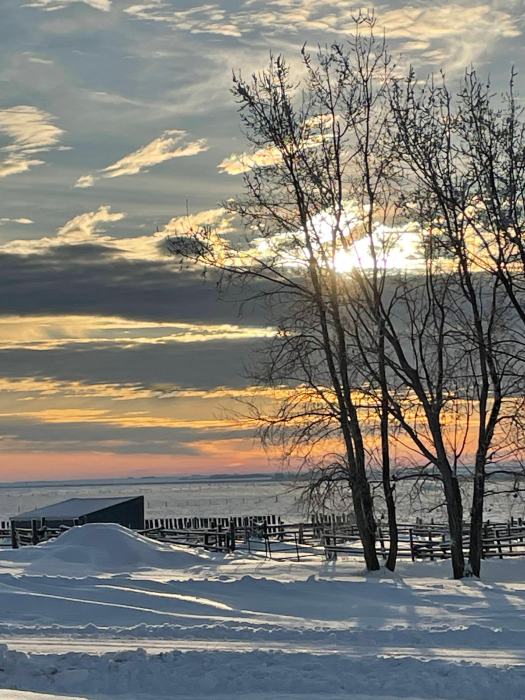
- Saskatchewan is known as the “Land of the Living Skies”, due to its vast, open sky, and spectacular sunrises and sunsets.
- Saskatchewan’s Official Flower:
- The Western Red Lily is the official flower of Saskatchewan, (chosen in 1941).
- The Canadian Prairies:
- Saskatchewan is part of the Canadian Prairies, which is one of the world’s largest uninterrupted stretches of flat land.
- The province is often called the “breadbasket of the world” due to its large agricultural output.
- Saskatchewan’s Dinosaur Fossils:
- Saskatchewan is home to some of the most significant dinosaur fossil discoveries in Canada. The Dinosaur Provincial Park is located in the southern part of the province, and fossils from Tyrannosaurus Rex and other species have been uncovered.
- World’s Largest Moose Sculpture:
- Saskatchewan is home to the World’s Largest Moose Sculpture, located in Moose Jaw. The sculpture is over 10 meters (33 feet) tall! His name is Mac the Moose.
- Saskatchewan Roughriders:
- The Saskatchewan Roughriders are the province’s beloved professional football team. The team is one of the most popular and successful in the Canadian Football League (CFL), with a dedicated fan base known as the Rider Nation.
- Saskatoon Berry:
- The Saskatoon berry is the province’s unofficial fruit. It’s a small, blue-purple fruit native to Saskatchewan and is used in jams, pies, and syrups.
- Largest Freshwater Lake:
- Lake Athabasca is the largest freshwater lake in Saskatchewan, covering around 7,700 square kilometers.
- Historical Fact – Wheat Production:
- In the early 20th century, Saskatchewan became one of the world’s largest exporters of wheat, which played a major role in the development of the global agricultural industry.
- Saskatchewan’s Snowbirds:
- The Snowbirds, Canada’s military aerobatic flight team, are based in Moose Jaw. They perform stunning air shows across Canada and internationally.
Quick Stats:
- Population (2021): Approx. 1.2 million people.
- Area: 651,900 square kilometers (about 4.5 times the size of the United Kingdom).
- Capital City Population (Regina): Approx. 250,000.
- Average Temperature in Summer: Around 20-25°C (68-77°F).
- Official Tree: White Pine.
- Official Bird: Great Horned Owl.
- The Capital city was renamed Regina, which means “queen” in Latin, and it was named after Queen Victoria? Regina became a city in 1903.
- John George Diefenbaker was the 13th Prime Minister of Canada, serving from 1957 to 1963. He grew up in Saskatchewan.
- Curling is the official sport (named in 2001).
- Prairies are flatlands, but Saskatchewan’s highest point is 1,392 m (4,567 ft) high in the Cypress Hills.
- Lloydminster is jointly administered by both Alberta and Saskatchewan. Its geographical location – on the border – of those provinces gives it a very unique position.
- One time zone and no daylight savings.
- There are over 100,000 lakes, rivers, streams, and forests.
If you have stuck with me all the way to the end I really appreciate that. I am just so appreciative of the beautiful province that I live in, I just wanted to share it with you.
Friend, maybe this will spark some interest for you in the place you live. There might be some interesting little tidbit about where you live that you might want to look into. Or just take a moment to find the beauty or unique aspects of where you live and be grateful for it.




Comment below with your ideas on Saskatchewan or whatever else you like. I would really like to hear your story. Shoot me a personal message through the contact form on the site. I would love it if you like this enough to share it with others. Please SUBSCRIBE in the box above, it helps you know more of what’s going on.
 Melodee Glassford
Wow! A lot of interesting info. Yes Saskatchewan is a great province!!
LikeLiked by 1 person